
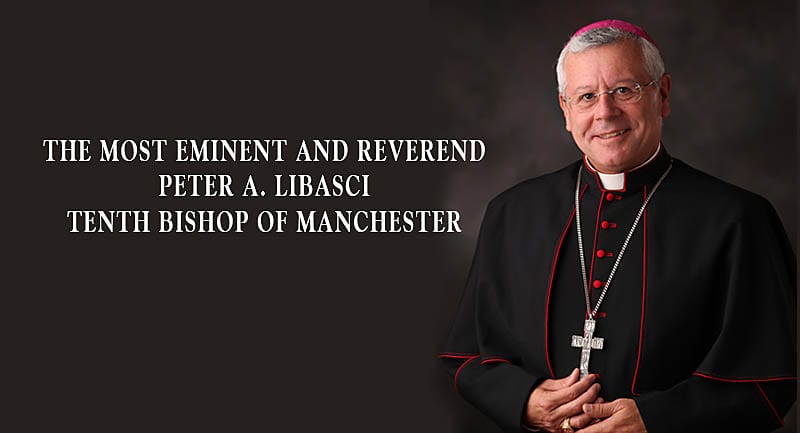
Christianity today is filled with religious titles. Pastor, Reverend, Bishop, Archbishop, Apostle, Cardinal, Father, and Pope are only some of them. In many churches these titles have become so familiar that few people stop to ask a basic question: Is this how Jesus Christ intended leadership in his Church to function?
The New Testament certainly recognizes leadership. It speaks of apostles, prophets, evangelists, shepherds, teachers, elders, overseers, and servants, and it tells believers to appreciate those who labor among them and faithfully care for others. The issue, then, is not whether the Church needs leaders. It clearly does. The more important question is whether biblical leadership was intended to create an elevated religious class distinguished from other believers by honorific titles, rank, and status. The New Testament points us in a very different direction.
Jesus Warned Against Religious Status
Jesus addressed this issue directly when speaking about the scribes and Pharisees. They loved public recognition, prominent places, and prestigious forms of address. Against that background, he told his disciples:
“But you are not to be called ‘Rabbi,’ for you have one Teacher, and you are all brothers. And do not call anyone on earth ‘father,’ for you have one Father, and He is in heaven. Nor are you to be called instructors, for you have one Instructor, the Messiah. The greatest among you will be your servant.” (Matthew 23:8–11)
The context is crucial. Jesus was confronting religious leaders who used position and recognition to elevate themselves above others. His answer was not the abolition of leadership but the rejection of self-exalting leadership. His words, “you are all brothers,” express the governing principle. There are different responsibilities within the Body of Christ, but there are not different spiritual classes of Christians. No believer becomes more valuable to God because a title is placed before his or her name, and no leader becomes spiritually superior to the people he serves.
Jesus immediately defined greatness in the opposite direction from worldly hierarchy: “The greatest among you will be your servant.” (Matthew 23:11) Biblical leadership therefore moves toward service rather than status. The greater the responsibility, the greater the obligation to serve.
What About Bishops, Elders, and Pastors?
This is where precision is important because several words that later became formal church titles actually do appear in the New Testament.
For example, the King James Version uses the word “bishop” in 1 Timothy 3:1. The Greek word is episkopos, meaning an overseer—someone entrusted with watching over and caring for others. Modern translations commonly render it “overseer.” Paul wrote, “Whoever aspires to be an overseer desires a noble task.” (1 Timothy 3:1)
What follows is revealing. Paul does not describe vestments, rank, ceremonial privilege, or a place within an ecclesiastical hierarchy. He describes character. An overseer is to be self-controlled, respectable, hospitable, faithful, mature, and able to teach. The emphasis is on the quality of the person and the work he performs, not the prestige attached to the position.
Likewise, an “elder” is not presented as an honorific designed to elevate someone above the congregation. Elders were mature believers entrusted with responsibility for caring for and guiding others. Peter gives a particularly clear picture:
“Be shepherds of God’s flock that is under your care, watching over them—not because you must, but because you are willing, as God wants you to be; not pursuing dishonest gain, but eager to serve; not lording it over those entrusted to you, but being examples to the flock.” (1 Peter 5:2–3)
The leadership Peter describes is the opposite of domination. A shepherd leads by caring for people, serving them, and providing an example worth following.
The same is true of the word “pastor.” The Greek word poimēn simply means “shepherd.” Ephesians 4:11 identifies shepherds among the ministries Christ provides to equip his Church. A shepherd is someone who cares for people; “pastor” was never intended to identify membership in a superior spiritual class.
Function Is Not the Same as Rank
This distinction helps clarify New Testament language. Paul could identify himself as “Paul, an apostle of Christ Jesus”because “apostle” described a ministry and responsibility the Lord had entrusted to him. Acts 21:8 similarly refers to “Philip the evangelist.” Scripture recognizes different functions because different believers have different responsibilities, abilities, and ministries.
But those descriptions tell us primarily what people did, not how highly everyone else was required to address them. Paul did not build his identity around insisting that everyone call him “Apostle Paul.” He repeatedly described himself as a servant and spoke of other believers as brothers, sisters, fellow workers, and coworkers in the gospel.
There is therefore an important difference between recognizing someone’s function and constructing a hierarchy of spiritual importance around that function. Leadership, authority, and responsibility are real in the Church, but all Christian leadership remains under the headship of Jesus Christ. He is the Chief Shepherd, and everyone else who shepherds does so under him.
What About “Reverend”?
The title “Reverend” has become customary in many Christian traditions, but the New Testament never uses it as a title for Christian ministers. The familiar biblical connection usually comes from Psalm 111:9 in the King James Version:
“Holy and reverend is his name.” (Psalm 111:9, KJV)
That verse is speaking about God. At the same time, we should not build an entire doctrine around the English word “reverend,” because the underlying Hebrew word carries the broader idea of being awesome or worthy of reverence, and modern translations render the verse differently.
The stronger point is simply that we do not find Christians in the New Testament routinely addressing their leaders as “Reverend Paul,” “Reverend Peter,” or “Reverend Timothy.” That was not the pattern of the early Church.
The Living Truth Fellowship recognizes and ordains believers who have demonstrated faithful Christian service, and ordination can also have practical value in modern society. Hospitals, prisons, weddings, and other institutions may require recognized ministerial credentials. But a legal credential does not create a higher class of Christian. A title should never become a demand for deference, a symbol of superior spirituality, or a means of placing distance between a leader and the people he or she serves.
What About Pope, Cardinal, and Archbishop?
Titles such as “Pope” and “Cardinal” are not New Testament leadership designations. “Archbishop” is likewise a later ecclesiastical title rather than a distinct office established in Scripture. Their histories differ, but each reflects later developments in church organization rather than a distinct leadership office named in the New Testament.
The New Testament pattern is much simpler. Christ is the Head of the Church, and under him are believers with different responsibilities, abilities, and ministries, all contributing to the growth and maturity of one Body. Ephesians describes Christ providing apostles, prophets, evangelists, shepherds, and teachers “to equip his people for works of service, so that the body of Christ may be built up.” (Ephesians 4:12)
That verse tells us why Christian leadership exists. Leaders are not given to the Church so everyone else can admire them or remain dependent upon them. They are given to equip other believers to serve. Healthy leadership does not gather ministry around itself; it helps other Christians become more capable of serving God and one another.
Honor Without Exaltation
Rejecting religious status does not mean Christians should become disrespectful toward leaders. Scripture teaches believers to appreciate faithful leadership. Paul told the Thessalonians:
“Acknowledge those who work hard among you, who care for you in the Lord and who admonish you. Hold them in the highest regard in love because of their work.” (1 Thessalonians 5:12–13)
Notice why they were to be respected: because of their work. Biblical honor is connected to character, sacrifice, faithfulness, and service—not merely to the prestige of a title.
This also means we should not become legalistic about forms of address. A Christian who has always called a longtime minister “Pastor Jim” does not suddenly become disobedient to Christ because the word “Pastor” passes his lips. Nor should this teaching become an excuse for rudeness or disrespect. The more important question is what the title represents. Is it simply a familiar way of identifying someone’s function, or has it become part of a system that places certain Christians in an elevated spiritual class above everyone else?
There Is Only One Head of the Church
The New Testament picture of the Church is not a pyramid with increasingly important Christians climbing toward the top. It is a body. Paul wrote that “in Christ we, though many, form one body, and each member belongs to all the others”(Romans 12:5). Different members have different functions, but they belong to one another and contribute to the health of the whole.
The Head of that Body is Jesus Christ. That leaves no room for Christian leaders to behave like spiritual celebrities, little kings, or indispensable intermediaries standing between believers and God. Genuine leaders point people toward God and toward the Lord Jesus Christ rather than drawing attention continually toward themselves.
Jesus settled the question of Christian greatness when he said, “The greatest among you will be your servant.” (Matthew 23:11) Whatever responsibilities the Lord has entrusted to us, whatever abilities we may have, and whatever recognition others may give us, we remain brothers and sisters serving together under one Lord.
That does not diminish biblical leadership. It defines what biblical leadership is supposed to be.
Comments
I’ve always struggled to address clerics as, “Father, Rabbi, or Reverend”. Also, I’ve never seen anywhere in the bible, the titles of Pope, Cardinal, or Archbishop. I truly respect those who have studied and have been ordained. But every time I’m pressed to call someone by these titles, I cringe. I’m even bothered by the misuse of “Apostle” as a title. Especially since none of the ones I know, have seen Jesus. And most have never planted a church.
Nobody should be called “Reverend.” Only God is Reverend.Regardless of your limitless titles, you are a mortal human being like the rest of us.
Do I now offend my church leaders calling them by their first names? To obey Christ means for me to offend all of the church leaders around me. To use titles is now a violation of my conscience.
You my friend, the author of this article, sound like you are on the road to truth. May you find the door!
Beautifully said. It confirmed what I believed already. I think in todays churches using titles reveals pride. Thanks, Ana
Thank you, very clarifying!
Thank you this was everything I needed !
The irony is thick…
Beautifully said. I think titles used I. Todays churches reveal pride. Thanks for confirming what I already believed
Good word!
Good Bible Teaching